GRESB was thrilled to take part in MIPIM 2026 in Cannes, France, where global real estate leaders gathered to exchange insights, test assumptions, and explore the future of the built environment. As an official Alliance Partner of MIPIM 2026, GRESB played an active role throughout the week’s program.
Across the week, conversations with investors, asset managers, and industry leaders pointed to a clear shift: sustainability is moving from commitment to performance—and from ambition to value creation.
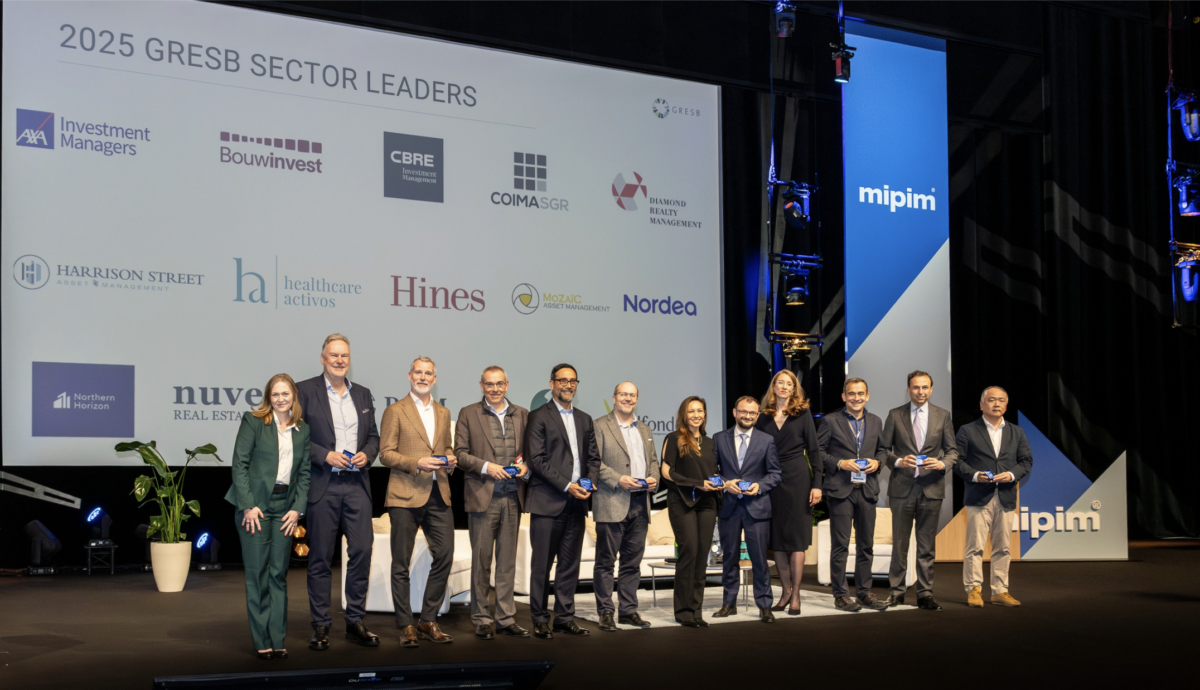
Alongside these discussions, GRESB contributed to key moments in the program, including hosting The Net Zero Reality Check session, sponsoring the launch of the Sustainable Real Estate Forum, and supporting the Global ESG Awards in partnership with EUBIN, where GRESB also recognized 2025 Sector Leaders in attendance.
From commitment to performance: Leadership spotlights
A consistent theme across MIPIM was the evolution of sustainability’s role in real estate. No longer treated as a standalone initiative, sustainability is increasingly embedded within core business strategy and asset management practices.
Market leaders emphasized that the industry has moved from intention to action. Sustainability is no longer a box-ticking exercise—it is expected to demonstrate measurable impact and justify its place alongside other investment priorities.
This shift is closely tied to financial performance. Buildings with stronger sustainability credentials are seen to lease faster and maintain value more effectively, while sustainability considerations are becoming critical in transactions. As a result, discussions are increasingly centered on protecting asset value, improving net operating income, and ensuring long-term competitiveness.
From data to decisions: The Net Zero Reality Check
GRESB hosted The Net Zero Reality Check: A Live Market Quiz & Debate as part of the official MIPIM program on the Road to Zero Stage, bringing together data and industry perspectives in an interactive format.
The session featured Mathilde Petriat, Chief Customer Success Officer at GRESB, alongside Hugh Garnett, Investor Strategies Senior Specialist – Real Assets at IIGCC, and Amanda Skeldon, Buildings Engagement Lead at the Science Based Targets initiative (SBTi).

Participants tested their assumptions using real data from the GRESB Real Estate Benchmark and a joint GRESB–MIPIM sentiment survey. Live polling shaped the discussion in real time, revealing where market perceptions align—or diverge—from the underlying evidence.
The session explored how these insights translate into pricing, capital allocation, financing conditions, and transition risk, before closing with a forward-looking discussion on whether the market is on a credible path to net zero—and what will determine the pace of change.
From ambition to action: Recognizing industry collaboration & leadership
GRESB partnered with EUBIN to support the third edition of the Global ESG Awards, held at the Grand Auditorium Stage. The ceremony recognized organizations leading sustainability efforts across the real estate industry.
As part of the program, Mathilde Petriat joined a panel discussion on how the industry reframes sustainability ambition around value, while sharing findings of a market sentiment survey jointly launched by GRESB and MIPIM in 2025.
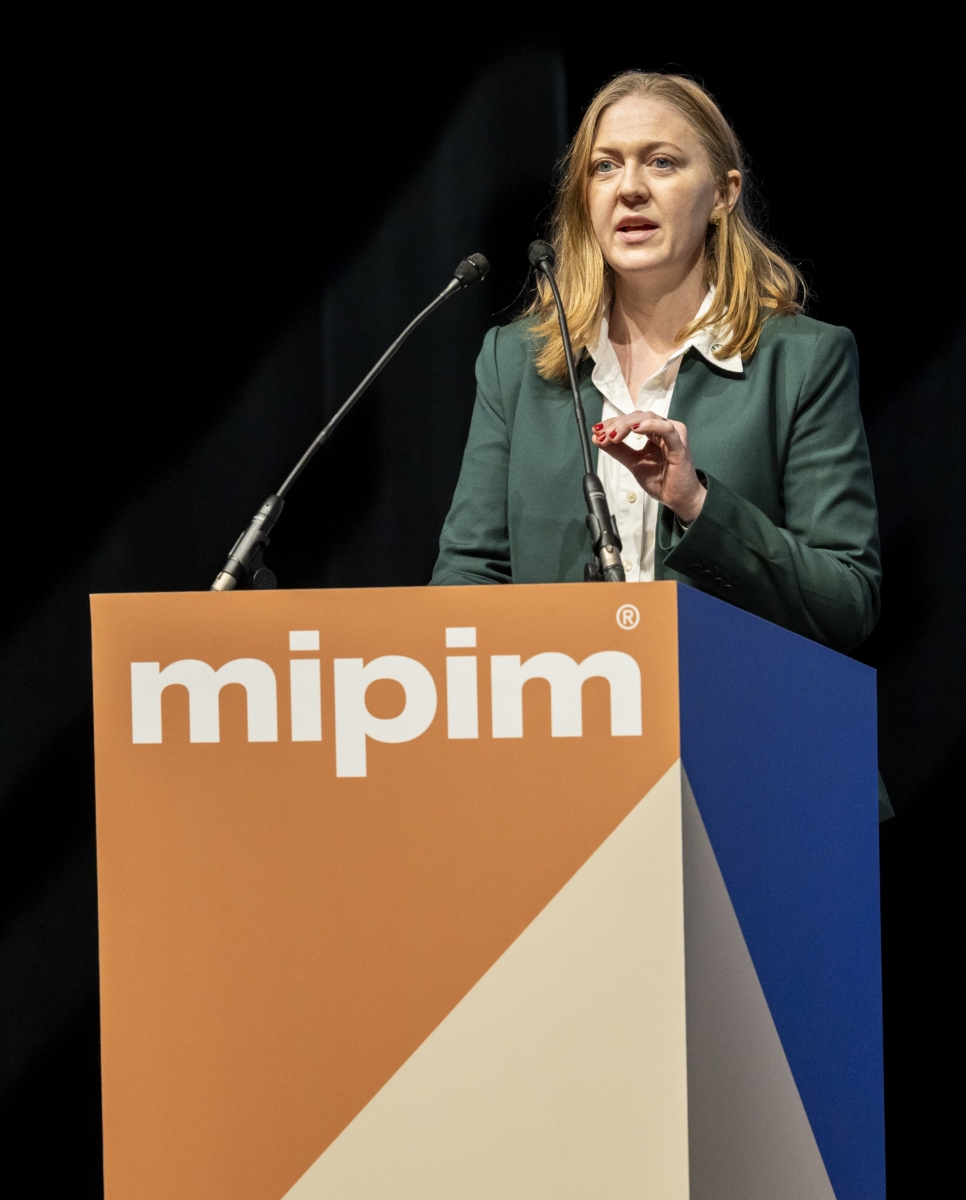
Katy Aylward, Director of Partnerships at GRESB, took the stage to showcase examples of GRESB’s commitment to industry collaboration and to highlight GRESB Solution Providers delivering impact across our network.
GRESB concluded by presenting 2025 GRESB Sector Leader awards to those in attendance at MIPIM, celebrating the continued leadership of these organizations in advancing performance, transparency, and resilience across real assets.

Voices from the market
Throughout the week, on- and off-stage, GRESB captured perspectives from across the industry, reflecting how sustainability is being interpreted in today’s market.
A clear message emerged: sustainability is now part of how real estate assets are managed and valued. Participants highlighted the growing importance of demonstrating return on investment, with examples pointing to direct impacts on net present value through retrofit strategies and operational efficiency improvements.
At the same time, data and digitization were identified as foundational. Benchmarking and measurement are essential to understanding progress and driving performance, reinforcing the need for robust data systems and controls.
When asked which issues the industry cannot afford to ignore, participants pointed to the energy crisis, electrification, and the challenge of improving existing building stock. Climate adaptation also emerged as a key concern, particularly as physical risks begin to influence asset values and market dynamics.
Together, the perspectives emphasized at MIPIM 2026 reflect a market in transition—one where sustainability is no longer a side conversation, but a core driver of how assets are managed, evaluated, and positioned for the future.