Our industry is engaged in an important dialogue to improve the efficiency and resilience of real assets through transparency and industry collaboration. This article is a contribution to this larger conversation and does not necessarily reflect GRESB’s position.
In private equity real estate, ESG strategy is too often confined to a single phase of the investment lifecycle. Acquisition teams focus on financial due diligence; asset managers concentrate on operational performance; and when it comes to exit, ESG credentials are retrofitted into marketing materials as an afterthought. The result is a fragmented approach that leaves significant value on the table.
GRESB provides a rigorous and consistent framework to measure sustainability performance at both asset and portfolio levels. But its true power extends far beyond the annual submission cycle. When embedded across the full investment lifecycle—from acquisition due diligence through active asset management to exit positioning—GRESB becomes a value-creation framework that compounds returns at every stage.
The opportunity is clear: funds that integrate GRESB-aligned sustainability strategy across the entire hold period don’t just achieve higher scores. They protect capital, enhance asset value, expand their buyer universe at exit, and build a fund track record that attracts institutional capital for future vintages.
Using a structured prioritization approach that secures internal buy-in and delivers measurable outcomes, you can make integration practical.

Source: Rider Levett Bucknall
Phase 1: ESG-informed acquisitions
The acquisition phase represents the single greatest opportunity to embed ESG into the investment thesis—and the point where it is most frequently overlooked. Traditional due diligence focuses on structural surveys, lease analysis, and financial modelling. ESG due diligence, where it exists at all, is often limited to an EPC rating check or a cursory review of environmental liabilities.
A GRESB-informed acquisition process goes significantly further. It assesses the target asset’s baseline sustainability performance against GRESB criteria, identifies gaps that represent both risks and value-creation opportunities, and builds a credible improvement roadmap into the acquisition business case. This includes climate risk assessments covering both physical risks (flooding, heat stress, extreme weather) and transition risks through tools such as CRREM, which models the carbon trajectory of assets against science-based decarbonization pathways to identify stranding risk.
Prioritizing opportunities at acquisition
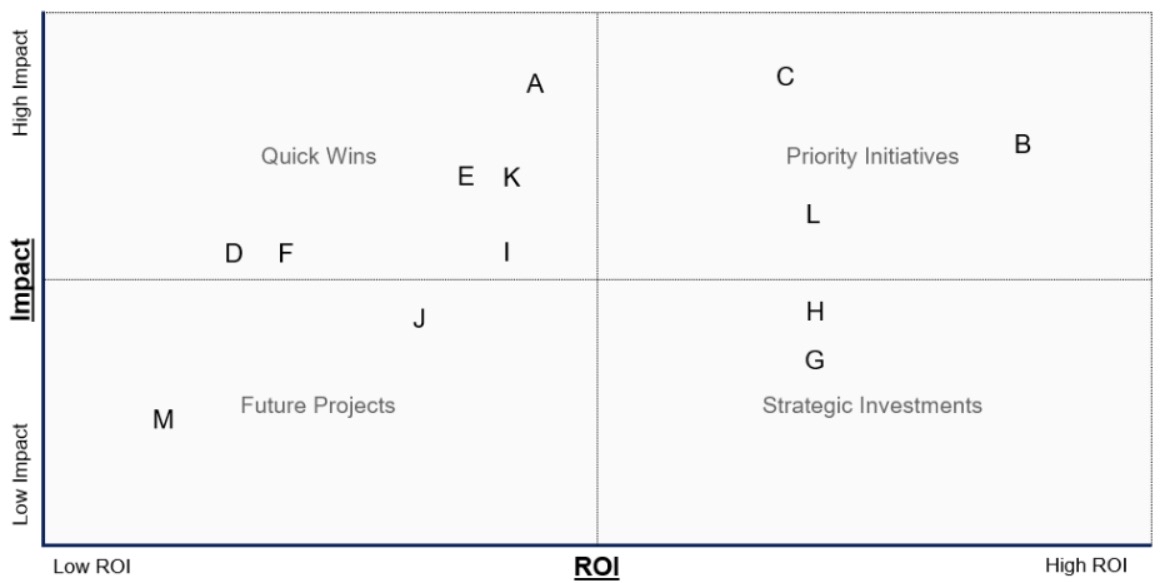
The challenge for investment committees is not whether ESG matters; it is understanding which initiatives to prioritize and what they will cost relative to the value they create. This is where a structured prioritization approach becomes essential. By mapping potential ESG improvements against a Return on Investment and Strategic Impact matrix, acquisition teams can categorize opportunities into actionable tiers.
Source: Rider Levett Bucknall
Critically, this prioritization framework gives investment committees a clear, data-driven basis for decision-making. It translates ESG opportunities into the language of finance—payback periods, ROI projections, and risk mitigation—and demonstrates how GRESB-aligned due diligence protects capital while identifying upside that traditional assessments miss.
Phase 2: value creation during the hold period
The hold period is where ESG strategy either delivers on its promise or stalls. Many funds still approach GRESB largely as an annual reporting task, often resulting in a busy spring of data gathering ahead of the July deadline.
This reactive approach misses the fundamental point: GRESB measures what you do, not just what you report. The score reflects genuine operational improvements, capital investments, and management practices implemented throughout the year. Deploying a structured investment framework across five GRESB-aligned categories transforms the hold period into a systematic value-creation engine.
In the first one to two years, the focus should be on executing quick wins and efficiency projects: operational expenditure improvements such as green energy procurement and sustainable facilities management, alongside efficiency upgrades like LED retrofits and data automation systems. These generate immediate GRESB score improvements, reduce operating costs, and—critically—establish the data infrastructure and baseline measurements that inform subsequent investment decisions.
In years two to four, the focus shifts to capital expenditure projects aligned with capital planning cycles: heat pump installations, renewable energy systems, façade upgrades, and electric vehicle charging infrastructure. These are sequenced using the prioritization matrix to ensure each investment delivers both ESG and GRESB performance improvements and measurable financial returns—improved asset resilience, enhanced valuations, rental premiums from improved occupier experience, and eligibility for green finance instruments.
Throughout the hold period, strategic investments in areas such as green loan structuring, SFDR alignment, and innovative ESG initiatives position the fund favorably with ESG-conscious debt providers and limited partners. These may not deliver immediate financial returns, but they strengthen the fund’s competitive positioning and support GRESB leadership indicators for strategy, resilience, and stakeholder engagement.
The continuous improvement engine
The key to sustained GRESB improvement is running parallel tracks: managing the current year’s submission while simultaneously building the pipeline for next year’s improvements. This requires tracking dual outcomes across every initiative—the GRESB score trajectory alongside the financial ROI.
When asset managers can demonstrate that a specific efficiency project delivered measurable energy cost reductions, improved tenant satisfaction scores, and contributed additional GRESB points, the business case for the next phase of investment becomes self-evident.
This evidence-based approach is also the most effective mechanism for securing internal buy-in. Fund managers and investment committees respond to demonstrated results, not theoretical projections. Each completed initiative builds the case for the next, creating internal momentum that transforms ESG from a perceived cost center into a recognized value driver aligned with NOI growth, tenant retention, and valuation protection.
Phase 3: exit positioning
The exit phase is where the cumulative value of lifecycle ESG integration becomes most tangible. Strong GRESB performance expands the buyer universe significantly. Institutional buyers with ESG mandates, impact-focused funds, and investors subject to SFDR Article 8 or 9 requirements increasingly filter acquisition targets by sustainability credentials.
A demonstrable GRESB improvement trajectory—not just a single score, but a track record of year-on-year progress—reduces buyer due diligence friction and supports pricing premiums.
Exit preparation should begin 18 to 24 months before the anticipated transaction. This is the window to prioritize high-impact, visible improvements within the Capex and Opex investment categories: building certifications such as BREEAM or LEED, renewable energy installations, and tenant engagement programmes that demonstrate active ESG management.
Twelve months pre-exit, the focus shifts to ensuring the GRESB submission is comprehensive and clearly showcases the improvement trajectory. Six months before exit, the ESG narrative should be packaged for marketing materials using the prioritization and ROI framework to tell a compelling value-creation story.
The most effective exit narratives translate GRESB improvements into buyer language:
“We invested across efficiency and capital expenditure projects, reduced operating costs, achieved target building certifications, and improved our GRESB score consistently across the hold period.”
This is not just a sustainability story; it is a value-creation story that resonates with investment committees on the buy side.
At portfolio level, strong GRESB performance across multiple assets strengthens the fund’s track record for future fundraising. Limited partners increasingly evaluate fund managers on their ESG delivery capability, and a demonstrated history of GRESB improvement provides credible evidence that sustainability commitments translate into operational reality.
Making it work: the prioritization framework
The thread connecting each phase of the investment lifecycle is a consistent, data-driven approach to prioritization. At acquisition, the ROI and Impact matrix identifies opportunities and informs the business case. During the hold period, it sequences investments and secures budget approvals. At exit, it provides the evidence base for the value-creation narrative.
For this framework to function effectively, it requires clear ownership and accountability. Investment committees need to see ESG initiatives evaluated with the same rigor as any other capital allocation decision. Asset managers need defined impact metrics and reporting cadences. ESG teams need the mandate and resources to drive implementation. And portfolio managers need visibility across the entire programme to identify patterns, share best practices, and optimize resource allocation across assets.
The prioritization framework bridges the gap between ESG ambition and financial discipline. It enables ESG leaders to communicate sustainability investments in the language that senior management and investment committees understand, transforming abstract sustainability concepts into concrete business cases with defined returns, clear timelines, and measurable outcomes.
As the GRESB submission season approaches—with the portal opening on April 1—now is the time to assess not just this year’s results, but how GRESB can drive value across your entire portfolio lifecycle. The earlier you embed this thinking into your investment process, the greater the compounding benefit across every asset and every fund.
This article was written by Cedric Cools, Head of ESG at Rider Levett Bucknall. Learn more about Rider Levett Bucknall here.
Read more from our partners.