
The Pulse by GRESB
The Pulse by GRESB is an insightful content series featuring the GRESB team, partners, GRESB Foundation members, and other experts. Each episode focuses on an important topic related to either GRESB, sustainability issues within real assets industry, decarbonization efforts, or the wider market.
- Watch on Youtube
- Listen on Spotify
- Listen on Apple Podcasts
Aligning Capital With Performance: The Rise of Sustainability-Linked Finance in Real Assets
In this episode of The Pulse by GRESB, we explore the evolving role of sustainability-linked finance in real estate. The conversation examines how lenders and borrowers can align financing with material sustainability priorities, including decarbonization, transition risk, physical climate risk, and energy performance. Tune in to learn how sustainability-linked finance can help direct capital toward practical improvements that strengthen asset performance and long-term value.
Explore the resources discussed in the episode, including EVORA Global’s Decarbonisation: The Delivery Gap white paper, the article on the IDP Real Estate Lending Template, and further resources from the IDP website.

Transcript
Can’t listen? Read the full transcript below. Please note that edits have been made for readability.
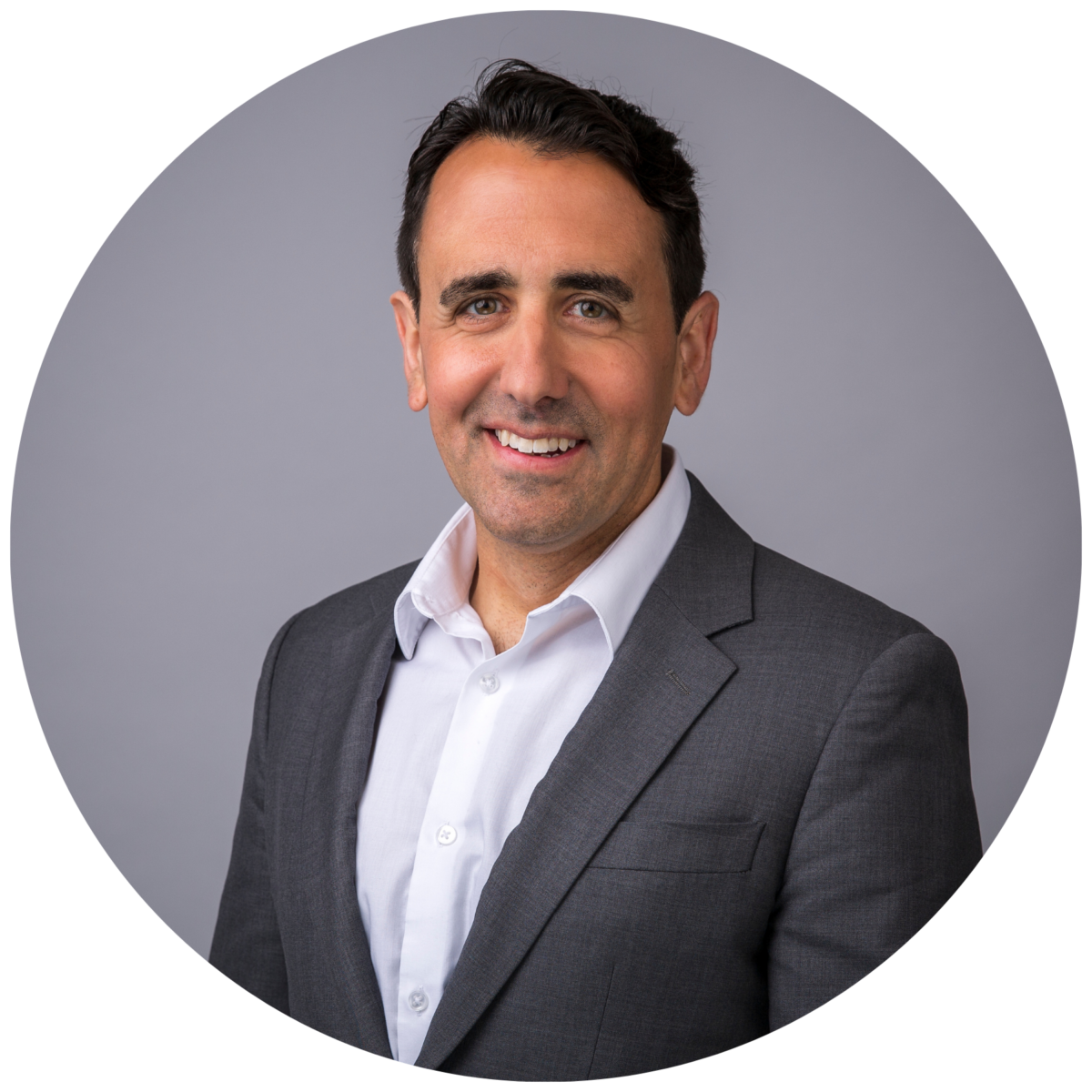
Chris: Hello, I’m Chris Pyke, and this is The Pulse by GRESB. I lead thought leadership and industry engagement for GRESB globally. I’ve worked in Real Estate and Infra, with roles in government, nonprofits, and industry, and I am delighted to welcome Paul Sutcliffe to the podcast today, the founder of EVORA Global. They are a long-standing GRESB partner with global experience in both real estate and infrastructure. And so, Paul, welcome to the podcast. We’re excited for this conversation. Tell us a bit about yourself. Get us started and get us excited about where you’re coming from. What do you do? How did you get here?
Paul: Well, first of all, thank you very much for having me, Chris. Wonderful to be here, talking to you. A long, long time ago, almost 30 years ago now, I was a geography graduate, and I was deciding what to do and got involved and sort of progressed through a Master of Science degree, which was very planning-oriented, so it was focused on sustainability and planning. And one or two of those modules were about engaging with people, engaging with businesses. So there was an environmental economics module, and that got me to working in consultancy. And consultancy firstly with businesses, and then in real estate. And so I worked for an organization called DTZ, and then, around, well, 15 years ago, decided with two other guys to set up a business called EVORA because, well, at the time it was called Sustainable Commercial Solutions, which was a bit of a mouthful, but we felt that sustainability wasn’t being given—and remember this was a long time ago—the credibility that it should have. And we firmly believed that there was a connection between sustainability performance and value, both from a risk perspective and an optimization perspective.
So we set out to explore that, to build a business around those principles. And our business today offers consulting support, which I lead across the globe, along with a data platform and a reporting and disclosure framework as well. So, that is EVORA Global.
Chris: So, Paul, lots of exciting things to talk about, and a little-known fact, I will just say, I also started my career with a degree in geography, which led to a focus on urban planning, which led to a focus on real estate and real assets. And so it’s great to have that shared origin story. And I really empathize with what you said about that belief that we can create value for business by addressing sustainability in the right way.
That really resonates, and I think a lot of our listeners also share that trajectory. It’s why we’re here. So, I mean, with that in mind, I think the topic for today is we’re gonna talk a bit about sustainability-linked finance, and this is an important mechanism in our industry.
It’s also one that is a moving target. So can you give us an on-ramp into this topic by talking about the state of play for lenders and borrowers in mid-2026? Where do we stand on sustainability-linked finance? What should people know about the moment?
Paul: Well, we’ve got better, for a start, so that’s really important. So for almost the entirety of EVORA’s lifespan of 15 years, we’ve been involved in working with lenders, with both banks and non-banks, in terms of lending to the real estate market. And that has involved helping set up sustainability-linked loan frameworks and green loan frameworks.
So I think it’s worth referencing the difference between a green loan and a sustainability-linked loan right now from a technical perspective. So a green loan would finance purely a sustainable initiative only, so it would focus, for example, on financing the installation of solar PV on rooftops.
Whereas with a sustainability-linked loan, the interest rate on the loan is linked to sustainability performance through predefined sustainability KPIs. And that’s important because if you go back 12 years, what we saw was lenders issuing frameworks and opportunities for borrowers or sponsors to select the best possible options.
And there were lots on this list. I remember seeing lists with 10, 15 different options, and a borrower or a sponsor could effectively select the best option for them that suited them, the easiest way through this. Select those options, and then progress away. And often, the thing that used to frustrate me was that those options that they selected for their sustainability-linked loans were not material to them as a business, so they were not necessarily issues that drove sustainability performance forward. Now, fast-forward 15 years or so, and what we’re seeing now is a greater recognition that that doesn’t always work. It’s not always perfect, but there is definitely a greater recognition that sustainability-linked loans, sustainability-linked finance, need to link to material issues and, of critical importance, transition risk and physical climate risks.
Chris: Paul, let’s just build on that for a half second in saying, when it works well, when we have a use-of-proceeds vehicle or we have a general obligation on a linked loan, what can be achieved? What does success look like? What are the best players, the most thoughtful players with the best advice, what are they achieving with these devices?
Paul: Well, let’s take asset managers that have sustainability goals and strategies. Most real estate funds are leveraged. The vast majority are leveraged, so they have equity and they have finance on top of that. That lending finance significantly supports the size of the pot for investment. If the lender and the fund manager can align in terms of objectives and in terms of both their corporate and the fund’s specific objectives, then the finance can be structured in a way that supports both the lender and the borrower in achieving the same goals, which further drives forward the agenda in terms of improving or reducing emissions and improving transition preparedness, for want of a better word. So I think, for me, what is absolutely critical is, if I’m advising on the equity side, if I’m advising a fund manager or an asset manager in terms of structure from a sustainable perspective, I’d be looking at: What are your commitments? What are your objectives? What commitments and objectives for decarbonization have you disclosed publicly? Have you disclosed through GRESB or other schemes? Have you communicated to your investors? What are you looking to do from an SFDR perspective? If they are a European fund or linked to the SFDR regulations, what objectives, targets, characteristics have you committed there? And then, if you’re borrowing, can you align your borrowing requirements to those commitments? So you’re borrowing from lenders that will actively support that, and then your debt will be cheaper as a result of that.
Chris: That totally makes sense. So when it works, you get greater access to capital, a preferred interest rate, you get alignment with your lender. That makes sense. So let’s go over to the other side of the fence. What are the disconnects that you see emerging between borrowers, lenders, sponsors, when these things don’t work right? What are some of the things that are typical pain points in the industry today?
Paul: This is not necessarily in priority order, but the first point I’d like to highlight is that, from a borrower’s perspective, there should be recognition that they are on the upside of this. So the assets that they own, that will be financed through borrowing or part-financed through borrowing, will achieve decarbonization pathways that will be supported by the borrowing, and on the exit of this, when those assets are sold, the owner of the assets, the borrower, will benefit from this. So, I think there needs to be a removal of the view that the lending should finance all of these savings. It’s about a part contribution, a partial contribution from all sides moving toward the right goal.
But a simple expectation that the discount rates, the interest for sustainability-linked loans, should finance all measures—I have heard that argued. I think it doesn’t work on that basis. We need to recognize that both will have fiduciary duties to their borrowers from a financial perspective, obviously, to their lenders and to their investment, their LPs, from a financial perspective, to generate returns.
And so both the borrower and the lender need to come together to achieve this. But there needs to be a recognition from the borrower’s side that, whilst sustainability-linked loans can contribute to cheaper finance, they shouldn’t entirely finance the entire cost of the improvements.
Chris: That’s really compelling. It’s a really important reminder to tell folks that, hey, it’s not just the measure that you’re investing in. You are ultimately creating a more valuable, less risky asset that you will recoup on when it comes time. You benefit directly financially at the exit of that asset. That’s really an important point.
So when you look at the landscape today, are there new or emerging issues that are becoming more important when it comes to sustainability-linked finance? Perhaps issues like physical risk or other things. What do we see emerging that maybe a few years ago were not part of these deals?
Paul: I think it varies significantly depending on the type of portfolio. But you’ve kind of hit the nail on the head. What we need to look at is, across funds, across the borrowers’ portfolios, what is material to those borrowers? And they’re the issues that we need to be focusing on.
Now, the trends that I’m seeing, and this is why it’s positive, the key issues that I’m seeing being addressed are around transition risk, around decarbonization, around being able to disclose appropriately to GRESB and in terms of decarbonization pathways, and being able to demonstrate progression and protection against physical climate risk.
So adaptation to physical climate risk. Unsurprisingly, perhaps, they’re two fundamental aspects that I see. The other aspects, especially if you look across portfolios in Europe, that I see being popular topics for linking sustainability-linked loan commitments or KPIs to are around EPCs, energy performance certificates. And that’s driven, in part, by regulation and by changes to the Energy Performance of Buildings Directive, which will enforce member states in Europe to introduce more stringent EPC rules and minimum energy performance standards. This will then push down into local legislation or country-specific legislation, which will require operators of assets to understand and improve energy performance certificates. And so financing linked to EPC improvements is becoming increasingly popular as well.
Chris: Wow, that makes good sense. I mean, we need that capital to position those assets to avoid penalties, to avoid things like leasing prohibitions and other kinds of things. So it makes total sense. You gotta get that money from somewhere. So let’s dive a little bit into the kind of information that lenders are getting.
We’ve talked a little bit about the idea of template fatigue. Hey, there’s lots of different things coming in. I know you’re involved in a variety of industry initiatives, including working with CREFC and working with groups like IDP. What do you see emerging that reduces this template fatigue, that helps us communicate more consistently?
Paul: So what is really positive is that I see the various schemes like GRESB, like your own organization, but also IDP, coming together and sharing ideas. So rather than everyone creating their own different frameworks, or various organizations creating their own frameworks, I do see much more collaboration. And I sit on CREFC Europe’s Sustainable Finance Forum, and late last year, we explored the possibility of providing guidance to CREFC Europe members on how to collect and report and disclose information. And the conclusion was made that there’s already a lot of information out there, a lot of frameworks out there.
So rather than create our own framework, let’s provide guidance on what’s available, whether that be GRESB’s framework or whether that be the IDP’s guide on collecting data from a lending perspective. So there is a great piece of work that has been completed by IDP.
And CREFC Europe has also provided a guide on this. And after this webinar, I’d love to share those with you, Chris.
So we can put them in the links so that people can download that information. In summary, the IDP’s checklist is simply a list of questions that can help standardize the way that data is collected. And CREFC Europe’s guide and report on that provides guidance on how it can best be used for organizations that are at different levels of their sustainability journeys, whether they’re just starting out or whether they’re incredibly experienced from a sustainability perspective. All in all, it’s about asking the same questions in a similar way to reduce the burden on borrowers and the lenders and to improve the ability to get information quickly to make the right decisions to address the issues that we’ve talked about, whether it’s climate risk, transition risk, physical risk, EPC, or otherwise.
Chris: That makes good sense. And you guys have had a very thoughtful article on this, cutting through the fatigue, working with IDP and others. We’ll have a link to your website to make sure people can get access to that resource and learn more. I’ll only embellish one quick thing: we’ve also been working very closely with IDP, both for the GRESB lender assessment, which makes sense. Obviously, we want to align those efforts. Maybe less expected, GRESB has recently released a new Data Center Assessment for general use. And data centers are, yes, we engage with them as an equity investment, but the bulk of a data center capital stack is typically private capital, private fixed income.
And so we actually recently did a crosswalk with IDP, and we really illustrated the complementarity of the new data center assessment with the IDP framework. So the IDP framework for data centers is really looking at how you can do direct lending into individual data centers, and we’re focused on how you understand the company and fund that owns that asset.
So we see two complementary things, and we have big agreement on material issues, metrics, and scope. So, Paul, to your point, it’s really important for us to be working collaboratively to reduce burden, to provide consistent results across frameworks, and we’re really excited about that. So, maybe as we try to land this plane a little bit, let’s look forward a little bit. We’re not done with this.
There is a lot of innovation needed to drive forward property-linked finance, to drive forward general-proceeds-type obligations. If you were to think on behalf of the industry, kind of think with me and share your perspective, where should we invest our time and our resources?
Where do we need some innovation in this space over the next year or two, three?
Paul: I think the key message from my perspective is: EVORA produced a paper on decarbonization and what was slowing decarbonization down. So, we ran an analysis of the data that we held, in terms of decarbonization, and found that the industry is not progressing quickly enough. Right, so if you look at decarbonization and you decouple grid decarbonization away from actual implementation of interventions that actually reduce carbon, the vast majority of carbon reductions that were reported, which on the face of it looked wonderful, from the portfolios of assets that we look for, the vast majority were actually achieved through grid decarbonization rather than action. So, what the real estate community needs to do is take action. This is absolutely critical for the ongoing success, financial viability of the industry, and our planet as well. So, finance that actively supports material issues that address transition and physical risk, energy efficiency, water, aspects that are materially important to real estate, and helps drive action forward.
That’s the key for me. Rather than just it becoming a disclosure requirement, it’s fundamentally important that stakeholders understand progress. But that disclosure needs to be linked to progress. And so where finance supports active interventions in assets that make those assets more sustainable and therefore protects financial value in those assets, that’s what we need to do.
If you look across the value-add portfolios, the value-add fund portfolios, for example, ensuring that sustainable action, sustainable activity is incorporated into value-add strategies, and finance used to leverage those portfolios supports that as well, is absolutely critical.
So it’s all about action. You could say the same for core funds as well. Finding the way to finance core funds, to take action forward, to address sustainable action and actually make it happen. I think the finance community has the ability to make a significant contribution to this. But equally, we need to recognize, as I’ve said earlier, that we’re working together on this and everyone benefits, rather than thinking that the owners of the asset should do all the work and vice versa. It needs to be a collaborative approach to make sure that action happens.
Chris: Paul, I really like that, and there’s so much alignment. At this moment, it’s probably hard to go wrong by thinking about Mark Carney. And as Mark Carney says, you know, “Why do we invest in brown assets? We invest in brown assets ’cause that’s where the carbon is, and that’s where the money needs to go.”
So as you said, you know, whether we’re doing value-add or repositioning, whatever we’re doing, the issue here is not—we use that reporting as the beginning and maybe the middle and maybe of a way to deploy capital effectively to action that leads to outcomes. That is our goal. And I think we could do worse than using the deployment of capital as a barometer for our success.
We want more money entering real, actionable projects. And so we really share that ambition. We need to bring this to a close. We really appreciate your attention to this really important topic. The flow of money into positive improvements in the built environment is what we are all about, and ultimately, transforming the built environment to benefit people and the planet.
So I wanna thank, first, Paul for giving his insights, and I really encourage everyone to check out the materials in the show notes to learn more about EVORA generally, and to learn more specifically about the work they’ve been doing with CREFC, IDP, and others. And then I wanna thank you all for sticking with us to listen to this episode, and I hope you’ll explore additional Pulse episodes by GRESB to learn more from other GRESB partners and leaders across the industry. Thank you, Paul, and thank you, everyone, for listening.
Paul: Thank you very much.